Subscribe via E-mail

Your email:

Purchasing & Spend Analysis Blog

Current Articles | RSS Feed RSS Feed

The Perils of Manual Purchasing Processes

Submit to Digg digg it |  Add to delicious  delicious |  Submit to StumbleUpon StumbleUpon | Submit to Reddit reddit 

Picture this: You've been given the go ahead to initiate a major project; or perhaps your department is in desperate need of supplies. Now the fun begins, particularly if this is a manual process.

You determine what you need, if it's within your budget and present to your manager for approval. This sits on their desk, buried for too long, and finally comes back to you with multiple changes or a rejection. So you make your revisions and begin the process again, watching your precious request sit on multiple desks.

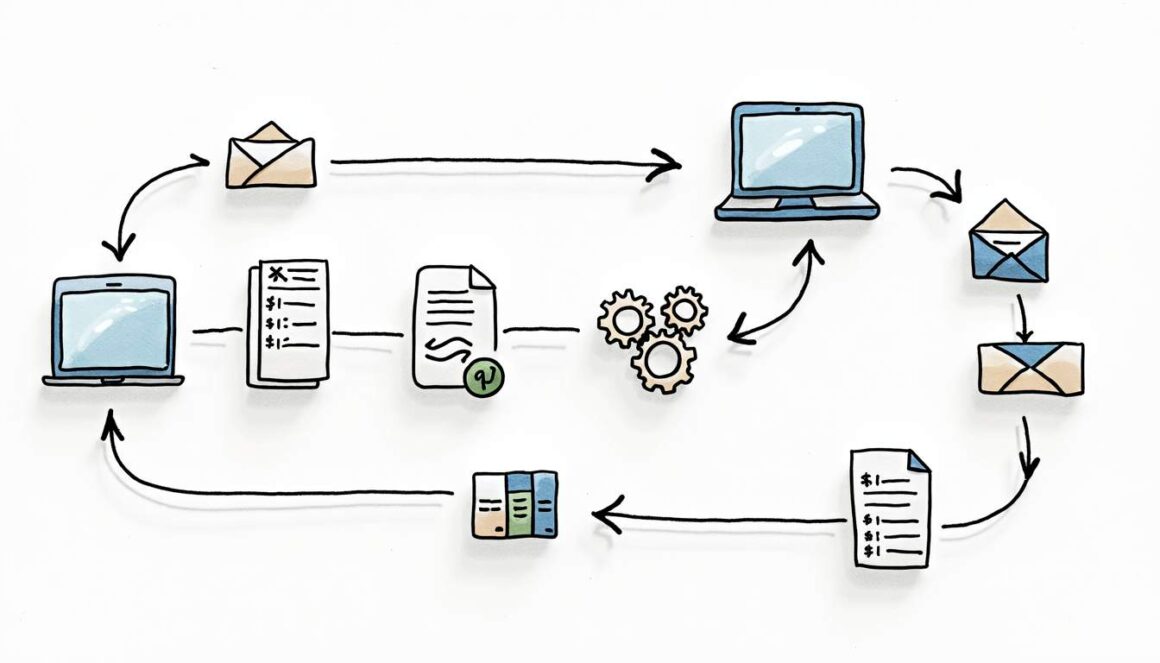
After the long process for approval you can finally begin to submit an RFQ to your selected vendors, present to management again and go to the purchasing department hoping they will efficiently launch the PO. This results in a long time waiting, a long manual process, valuable employees wasting too much time on what should be an efficient process; and TIME IS MONEY.

You know your company should focus on being profitable and productive in an efficient manner. You know your company needs a way to streamline their purchasing processes. You know you need change.

Why does this have to be so long and so painful? Why can't the process of trying to make money and stay in business be easier, more efficient, and streamlined in a fashion suitable for this new decade? Why is it that the executives have no idea how much money has been spent on non-payroll spending?

Change can be frightening, but the unwillingness to change can be extremely detrimental to the success of your company.

Do your homework, explore your options. Only purchase what you need and make sure the Purchasing Management software you choose has a strong implementation, training and support team; and is Sarbanes-Oxley compliant.

That's what we do at Bellwether.


Purchasing Automation Helps Protect Hospitality Brand Image

Submit to Digg digg it |  Add to delicious  delicious |  Submit to StumbleUpon StumbleUpon | Submit to Reddit reddit 

Hospitality Managers know protecting their brand image is the most important part of their jobs. Brand image ranks as one of the highest priorities in the industry because it is a reflection of everything companies do. A brand image should be consistent from property to property, reflected in everything from fliers to registration forms to the confections left on the bed pillows. A brand image reflects the perception the public has of the property, and even a subtle shift in perception can affect a property's image and, ultimately, its bottom line. Shifts in perception are largely caused by differences from property to property or even within just one property itself, resulting in brand image changes or brand corruption. Simple things, like the soap used in a property's room in Florida should be the same as the soap used in a property's room in California. Customers expect consistency. They form a certain perception or image of a business, so properties that may be experiencing shifts in image need to review their business processes, especially their purchasing cycles because the purchasing process is an area where image or brand corruption can easily take place.


Brand corruption

Brand corruption is big problem, especially among multiple property businesses because in larger organizations, management orders become less and less clear as they trickle down through the hierarchy. If managers are forced to improvise due to lack of clarity in the purchasing process, brand corruption can easily occur. Maverick spending, spending with unapproved vendors, paying too much - all of these things can start a downward spiral of quality and image if clear cut policies are not in place. As hospitality businesses become more global and, therefore, more complicated to run, manual processes must make way for automated business processes, especially in the area of purchasing. Hospitality businesses that have automated purchasing cycles realize not only brand image consistency, but also process improvement, accountability and huge dollar savings in time and materials.

Brand protection

Purchasing automation takes out the guesswork out of ordering. With parameters pre-set by management, consistent, rules-based software takes over the process of ordering goods and services. Managers place orders through approved catalogs in the software. These management-approved catalogs contain pre-negotiated pricing and volume discounts. Outside of the built-in catalogs, portals exist to allow managers to tap into other catalogs that have been pre-approved. When several properties order from the same vendors, rather that each property ordering from different vendors, economies of scale are reached, and the cost savings is very significant. Because purchasing software takes away the opportunity for maverick spending, substitution, inventory shortages and the like, managers are assured that every item or service the property buys is consistent with the brand image, budget and corporate goals.

Purchasing automation may sound like a revolutionary new idea, but it has been around for almost three decades. In the hospitality industry, automated purchasing systems have historically occupied a low position on the value chain. This is unfortunate because the hospitality industry is the type of business that can really benefit from automating the purchasing process.

Keeping up with purchasing, inventory, supplier management, sourcing, contract management, receiving and other tasks involved in the purchasing process is simply not possible if the facility is on a manual system. This is one big reason why multiple properties get in trouble with brand consistency. The material management process has grown too big and too complicated to run on a manual process. Automating the purchasing cycle can change this, but it requires a paradigm shift - from thinking of purchasing as a unilateral function to promoting its value as the one process in the company that has a complete vision of the entire business and is able to greatly control brand image throughout the organization:

Procurement needs to strategically position itself as the only aspect of the corporation that truly has a 360- degree lens on the entire business. It has a full scope view into the directions of the enterprise because it has touch points with all the internal stakeholders. In addition, with its ongoing dealings with the external stakeholders -vendors - it has additional insight into the marketplace - trends, opportunities and pitfalls. Vendors are often clients and/or competitors, which further enhances the focus on the business lens. (Patricia J. Moser-Stern)

Bellwether Software has helped many businesses in the hospitality industry. Purchasing Management eXtra establishes Quality Control that mandates procedures be in place that establish protocols for ordering goods and services that are consistent with the brand image and corporate goals.

Learn more about Purchasing Management eXtra, available in both Windows and Web-based versions, by visiting www.bellwethercorp.com or by calling 502-426-5463.


All Posts